Minimalist Travel Packing Planner: Pack Light, Stay Calm
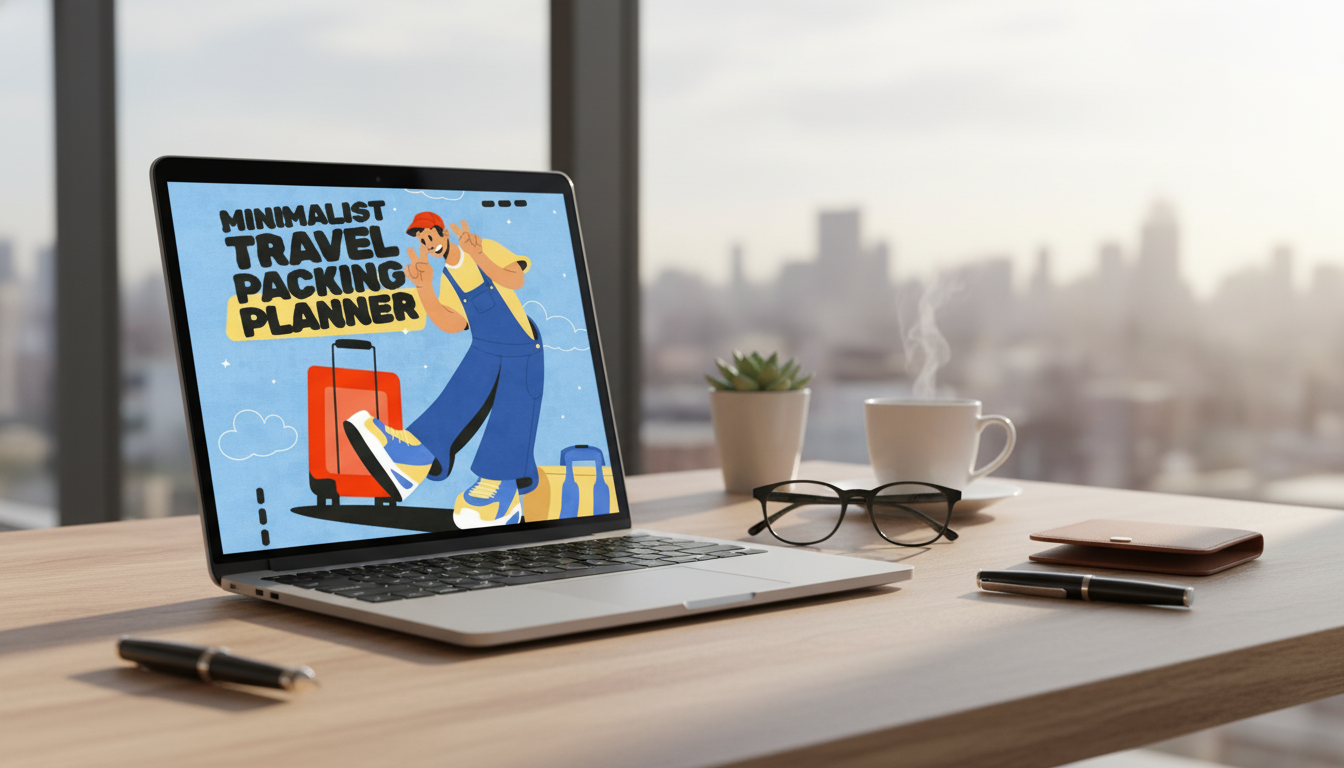
Minimalist Travel Packing Planner: Pack Light, Stay Organized, Travel Stress-Free
Packing light is easier when every item has a purpose and every outfit is planned around real activities, weather, and laundry access. A minimalist digital packing planner turns “What am I forgetting?” into a simple checklist system—so bags stay lighter, mornings run smoother, and trips feel calmer from departure to return.
What “minimalist packing” actually means (and what it doesn’t)
Minimalist packing isn’t about deprivation or trying to “win” travel by taking almost nothing. It’s a practical approach built on better decisions up front—so you carry fewer items, but use what you bring more often.
- Focus on function: fewer items, higher re-wear, easier mixing and matching.
- Pack for a schedule, not for every possible scenario: choose pieces that match what you’ll actually do.
- Choose versatile layers and quick-dry fabrics: they reduce duplicates and make sink-laundry realistic.
- Avoid the common trap: “just in case” items that rarely get used (and always add weight).
How a digital packing planner makes trips lighter and smoother
When packing feels stressful, it’s usually because decisions are happening too late. A digital planner helps you decide earlier, in a structured way, and reuse what works the next time.
- Creates a repeatable system that can be reused for weekend, work, and long trips.
- Prevents overpacking by forcing item decisions around days, outfits, and activities.
- Reduces last-minute stress with a single source of truth for essentials.
- Helps avoid duplicates (extra chargers, too many tops, backup shoes).
- Makes it easier to pack carry-on only by visualizing categories and limits.
Common packing problems and the planner fix
| Packing problem | What causes it | Planner-based solution |
|---|---|---|
| Overpacked suitcase | Packing by category without limits | Set a cap per category and build outfits first |
| Forgotten essentials | Relying on memory while rushed | Use a master essentials checklist and trip-specific add-ons |
| Too many “nice to have” items | Fear of being unprepared | Assign each item to a real activity/day or remove it |
| Messy bag mid-trip | No system for dirty laundry and small items | Add a daily reset checklist and packing zones |
| Airport stress | Items scattered and hard to reach | Create a quick-access list (documents, meds, tech, snacks) |
Minimalist packing workflow (the 20-minute method)
This quick workflow keeps packing grounded in reality. The goal isn’t perfection—it’s a clean, repeatable process that stops the spiral of “maybe I’ll need it.”
- Write the trip reality check: duration, weather range, activities, dress code, laundry access.
- Pick a color palette: 2–3 core colors + 1 accent to multiply outfit combinations.
- Build outfits first: then fill in only what’s missing (layer, shoes, outerwear).
- Add essentials using a standard list: documents, medications, toiletries, tech.
- Apply “one in, one out”: if something new goes in, something else must leave.
- Final pass: remove duplicates, check weight/space, confirm chargers/adapters.
For carry-on toiletry limits, check the current TSA guidance on liquids: TSA: Liquids Rule (3-1-1) for Carry-On Bags.
Capsule packing: a simple formula for carry-on travel
A capsule approach keeps options high and item count low. Think “small wardrobe that works together,” not “random favorites.”
- Aim for 3–5 tops, 2 bottoms, 1 mid-layer, 1 outer layer (adjust for climate).
- Choose 2 pairs of shoes max: one worn, one packed (unless specialty needs apply).
- Use accessories (scarf, belt, jewelry) to change looks without adding bulk.
- Prioritize fabrics that re-wear well and dry quickly (especially for sink-laundry trips).
- Keep a small comfort kit that earns its space: sleep mask, earplugs, minimal skincare, tiny detergent sheets.
For health essentials that are easy to overlook, the CDC’s guidance is a helpful reference: CDC: Travelers’ Health — Packing a Travel Health Kit.
What’s inside the Minimalist Travel Packing Planner (and how to use it)
A good planner reduces decisions, not adds paperwork. The structure should help you define the trip, pack with limits, and learn from what you didn’t use.
If you want a ready-to-use system, start here: Minimalist Travel Packing Planner | Digital Packing Guide for Light, Smart & Stress-Free Trips.
Smart packing habits that keep bags light on every trip
For trips with a lot of people interaction—work events, conferences, visiting family—having simple “defaults” for messages and RSVPs can lower social friction. A lightweight option to keep on hand is Modern Etiquette Micro-Course | Printable Digital Etiquette Guide | Texting, Social Media, RSVPs & Everyday Politeness Tips.
When a minimalist plan needs exceptions
A calm pre-trip routine (so packing doesn’t take over the day)
For a calming audio routine you can use before departure or during the flight, consider Calm Your Mind: Guided Meditation Series | Audio Course | Anxiety Relief Meditation.
FAQ
How far in advance should packing start for a stress-free trip?
Start 48 hours out by planning outfits and doing any needed laundry, pack essentials and tech 24 hours out, then add quick-access items the morning of. Early outfit planning prevents “extra options” from multiplying, and a checklist keeps last-minute rushing from creating mistakes.
How do you avoid overpacking without worrying you’ll forget something important?
Use a master essentials list (documents, medications, key toiletries, chargers) plus trip-specific add-ons, then plan outfits first instead of packing by category. Finish with a “one in, one out” pass so every item earns its space.
What’s the simplest way to pack carry-on only for a week?
Use a capsule formula (3–5 tops, 2 bottoms, layers), coordinate colors, limit shoes to two pairs, and plan for re-wear and laundry. Wear bulky items in transit and choose quick-dry fabrics so you can wash small loads if needed.








Leave a comment