Modern Etiquette for Busy People: Texting, RSVPs & More
Modern Etiquette for Busy Life: Texting, Social Media, RSVPs, and Everyday Politeness
Modern manners are less about rigid rules and more about reducing friction: making plans clear, messages kind, and interactions considerate in fast-moving digital spaces. When people don’t have to guess what you mean (or wonder if they’ve been ignored), conversations feel easier and relationships feel better supported. Below are small, doable habits for texting, social media, RSVPs, and everyday moments—built for real schedules and real inboxes.
What Modern Etiquette Really Means (and Why It Matters)
Modern etiquette is mostly two things: clarity and care. Clarity sets expectations so others don’t have to decode your message or chase details. Care protects dignity, time, and privacy—especially when so much communication is public, permanent, and fast.
If today’s biggest pain points feel familiar (ambiguous texts, oversharing, late RSVPs, and casual rudeness), a simple filter helps: Is it clear, kind, and timely? Small choices compound into a reputation for reliability, professionalism, and warmth—often more than grand gestures ever do.
| Situation | A considerate default | What to avoid |
|---|---|---|
| Confirming plans | Send a short confirmation with time/place and any needed details | Vague “see you later” with no specifics |
| Group chats | Use clear asks; summarize decisions; keep side topics minimal | Flooding with memes when people are coordinating |
| Social media posting | Assume posts travel; ask before tagging; keep sensitive info private | Posting others’ news or photos without permission |
| RSVPs | Respond promptly; if unsure, communicate a deadline for your decision | Ghosting invitations or last-minute changes without explanation |
| Everyday interactions | Brief courtesy: greetings, thank-yous, and basic consideration | Treating service workers or acquaintances as invisible |
Texting Etiquette That Prevents Misunderstandings
The best texting etiquette is front-loaded: give context early, so the other person can respond quickly without a back-and-forth.
- Put who/what/when in the first message. Try: “Can you meet Thursday at 6 at Westside Café?” instead of “Want to meet up?”
- Aim for timely replies. If you can’t answer fully, acknowledge: “Saw this—replying after my meeting.”
- Assume warmth in short form. Sarcasm is easy to misread; save it for people who consistently get your tone.
- Keep caps and punctuation readable. All-caps can feel like yelling unless it’s clearly celebratory.
- Double-text for clarity, not pressure. A missing detail (“Actually, 6:30”) is helpful. A guilt message (“Hello??”) raises tension.
- Voice notes: ask first and keep them short. A quick text summary of the key ask is considerate.
- Don’t weaponize “seen.” Read receipts aren’t a contract; treat delays with patience unless something is urgent.
- Move sensitive topics to a call. When emotions or nuance are involved, richer communication prevents regret.
Group Chats and Threaded Conversations Without the Chaos
Group chats work best when everyone knows what the chat is for and how decisions will be made.
Social Media Manners: Privacy, Tagging, and Public Disagreement
Social etiquette online starts with one assumption: posts travel farther than intended. As the Pew Research Center notes, social platforms are widely used—meaning your audience is often broader than you feel in the moment.
- Consent-first posting. Ask before sharing identifiable photos, locations, or personal updates—especially involving children, health, or relationships.
- Tagging and mentions: default to asking in professional contexts, and respect “please don’t tag me” boundaries.
- DM etiquette: keep requests concise and specific, and don’t demand immediate replies.
- Comment strategy: praise in public; correct in private when possible.
- Disagreement online: address ideas, not people; avoid pile-ons; step away when emotions spike. For communication skills that support healthier relationships, the American Psychological Association resource hub is a useful reference point.
- Stories and reposts: credit creators, don’t crop watermarks, and avoid resharing information you haven’t verified.
- Work and networking: keep your tone professional and avoid venting that can be traced back to colleagues.
RSVPs and Invitations: The Reliability Skill People Remember
Everyday Politeness That Doesn’t Feel Stiff
A Simple Micro-Learning Approach for Building Better Habits
Printable Guide and Micro-Course Option
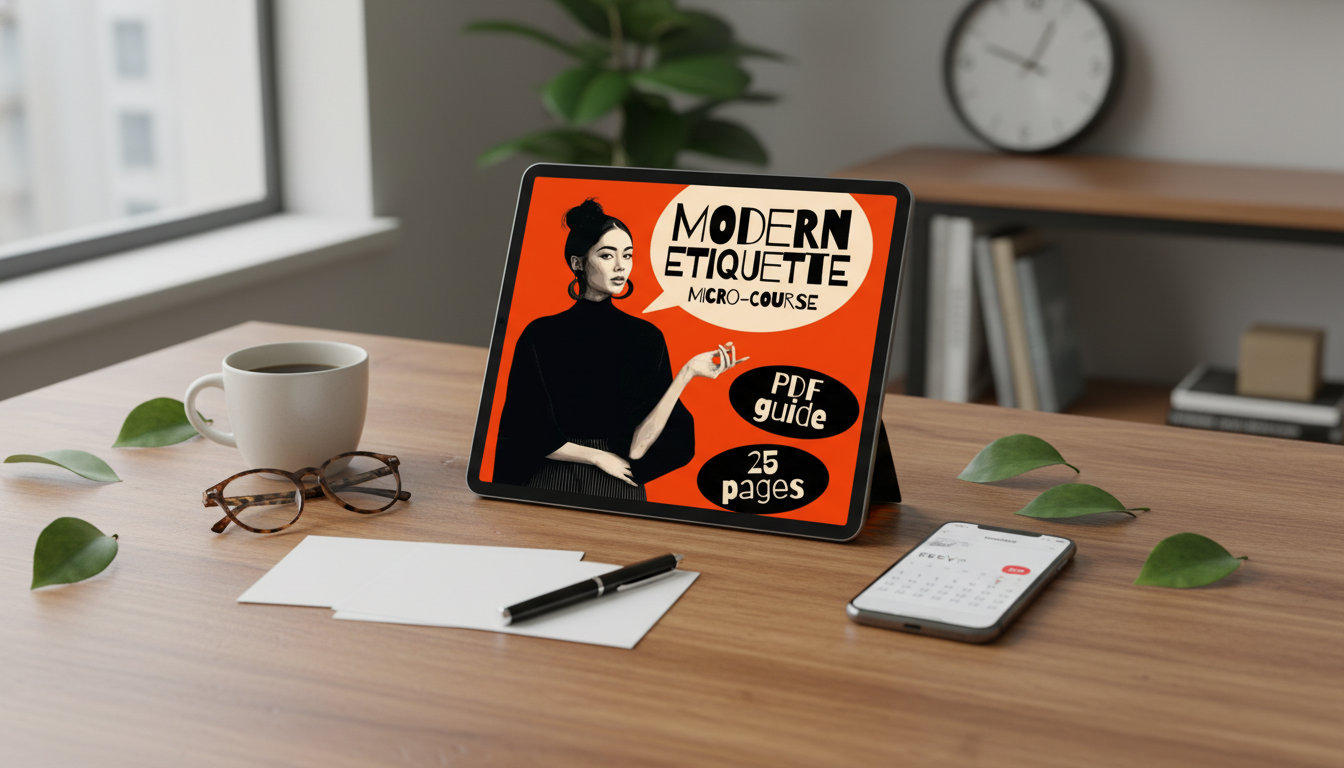
If you want quick references you can use immediately, a printable guide can remove decision fatigue. For a structured reset that covers texting tone, social media boundaries, RSVP timing, and everyday politeness, consider the Modern Etiquette Micro-Course | Printable Digital Etiquette Guide. For adjacent “high-friction” communication zones, these in-stock options can also help: Online-Dating Profile Blueprint | Printable Guide to Authentic Dating Profiles, First Messages, and Better Matches and Minimalist Travel Packing Planner | Digital Packing Guide for Light, Smart & Stress-Free Trips.
For additional general guidance on manners and social situations, the Emily Post Institute is a long-standing etiquette reference.
FAQ
What’s the most polite way to follow up when someone hasn’t replied to a text?
Send one low-pressure follow-up that restates the ask and makes it easy to respond: “Just checking—are we still on for 6 tomorrow? If not, no worries.” If timing matters, include a gentle deadline instead of repeated pings.
Is it rude to leave a group chat?
Leaving isn’t rude by default. If it affects planning or close relationships, a brief note like “I’m going to step out to reduce notifications—text me directly if needed” keeps things smooth; otherwise, archiving or muting can be a quieter option.
How late is too late to RSVP?
By the stated deadline. If you’re past due, respond immediately, apologize briefly, and ask if there’s still space—then don’t show up without confirmation.









Leave a comment